Then Strangers and Foreigners, Now Citizens of Heaven
Key Text: “For our conversation is in heaven; from whence also we look for the Saviour, the Lord Jesus Christ.” Philippians 3:20
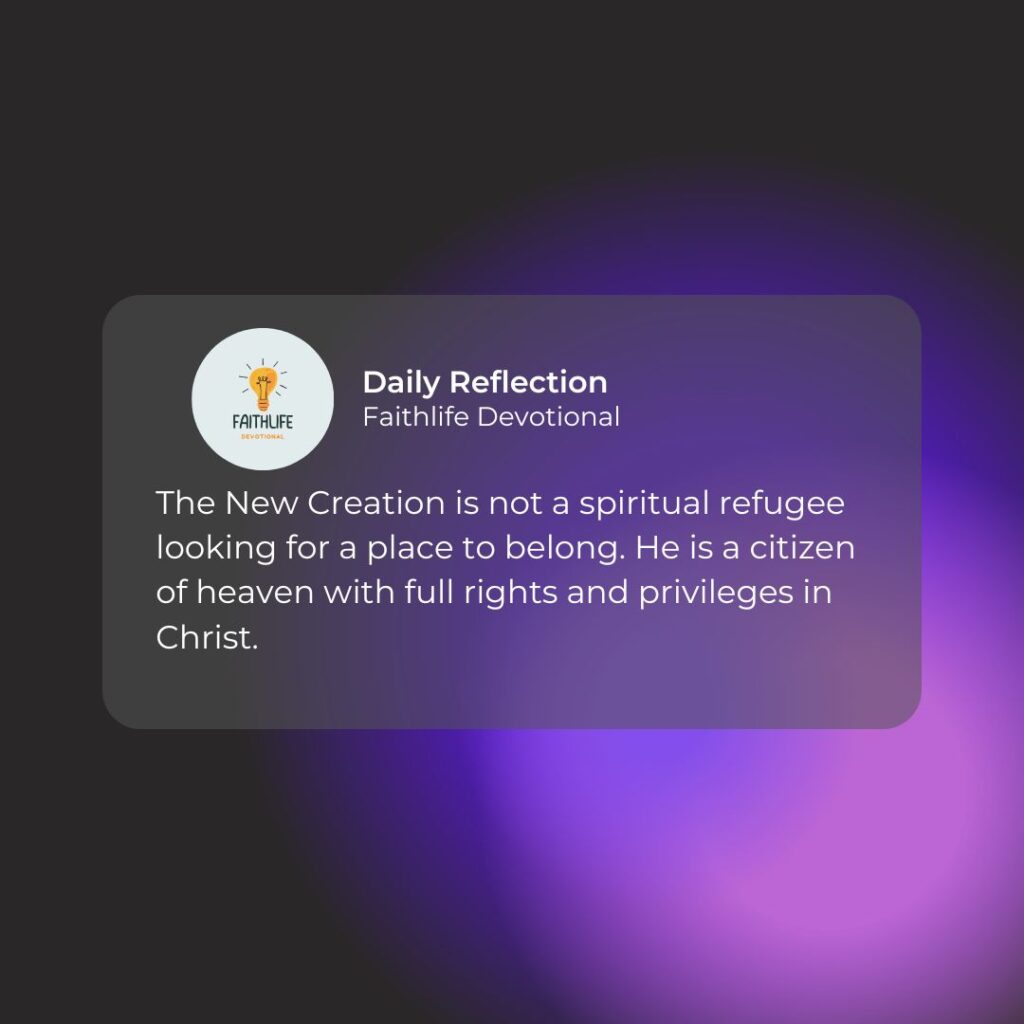
Before salvation, humanity was alienated from the life and kingdom of God. We were outsiders with no covenant rights, no spiritual inheritance, and no access to the promises that belong to God’s family. But through Christ, we have been brought near and given citizenship in God’s kingdom. The New Creation is not a spiritual refugee looking for a place to belong. He is a citizen of heaven with full rights and privileges in Christ.
Imagine someone who carries a passport from a powerful nation but never uses its benefits because he does not know what belongs to him. Sadly, many believers live this way. They know they are saved, but they do not know the privileges, authority, and inheritance they have received in Christ. The Gospel did not simply rescue us from darkness; it transferred us into God’s kingdom. We are no longer spiritual tourists passing through. We belong here.
This heavenly citizenship affects how we think and live. Citizens represent their nation wherever they go. In the same way, believers are called to reflect the values, character, and culture of God’s kingdom in everyday life. While we live on earth, our identity and allegiance are rooted in heaven. We are not trying to fit into a fallen world system; we are ambassadors bringing heaven’s influence into the world around us.
Prayer and Confession
Father, I thank You that I am a citizen of Your kingdom through Jesus Christ. I declare that my identity is rooted in Christ and not in the systems of this world. I walk in the privileges, authority, and inheritance that belong to me as Your child. Through my life, Your kingdom is revealed to those around me. Amen.
Reflection
Are your daily choices shaped more by the values of the world around you or by the values of God’s kingdom?
Further Reading: Ephesians 2:11-19, Colossians 1:13, 2 Corinthians 5:20, Hebrews 12:22-24, 1 Peter 2:9-10